

Israel- Palestine War
Ukraine War
Synod 2023
Persecution
war and terrorism
Eucharistic congress
Israel- Palestine War
Ukraine War
Synod 2023
Persecution
war and terrorism
Eucharistic congress
Israel- Palestine War
Ukraine War
Synod 2023
Persecution
war and terrorism
Eucharistic congress
Israel- Palestine War
Ukraine War
Synod 2023
Persecution
war and terrorism
Eucharistic congress
Israel- Palestine War
Ukraine War
Synod 2023
Persecution
war and terrorism
Eucharistic congress
Israel- Palestine War
Ukraine War
Synod 2023
Persecution
war and terrorism
Eucharistic congress
MAGAZINES
VIDEOS



Pope Emeritus Benedict XVI passes away at 95, funeral details yet to be announced
News Desk
Saturday, 31 Dec 2022
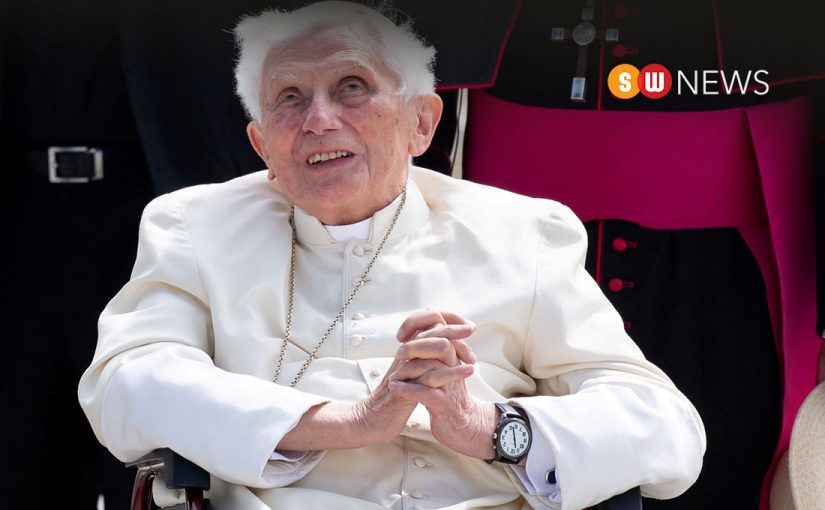


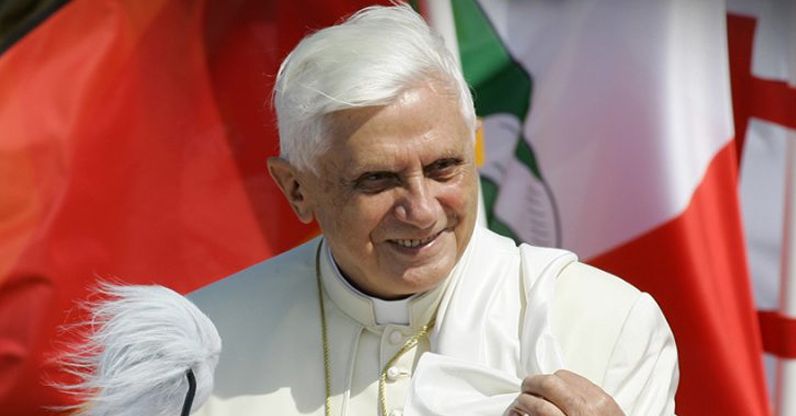
SW News: Pope Emeritus Benedict XVI passed away at the Mater Ecclesiae Monastery in the Vatican. He was 95 and had been ailing for quite a while.
Details about the funeral are awaited and there are reports that he could be laid to rest in St Peter’s Basilica as per the rites reserved for former Bishops of Rome. It was on December 28 that Pope Francis himself hinted that the former pontiff’s health was in serious peril, calling for prayers during his General Audience.
The former pope was the first successor of St Peter in 600 years to step down. After his historic resignation in 2013, Benedict XVI had been leading a quiet, contemplative life in Mater Ecclesiae Monastery in the Vatican, consistently praying for the reigning pontiff and the Church in general. He was helped by Archbishop Ganswein, his long-time secretary, and enjoyed the company of his pet cats, grand piano and a vast library. He entertained guests, both ecclesiastical and civil, occasionally.
Preparing for the final journey
News of the pope emeritus’ failing health reached the public domain in July when his secretary wept during a public event while recollecting what Benedict XVI told him about journeying to heaven. It was at the Nymphenburg Palace in Munich, Germany, that he shed tears
while quoting the former pontiff as saying “I would never have believed that the last stretch of the journey that would take me from the Mater Ecclesiae monastery to the gates of heaven with St. Peter would be so long.” The prelate said that the past few years had sapped the energy of the pope emeritus and now his speech is “becoming increasingly low and incomprehensible.”
The same month witnessed 20 new cardinals lining up at Mater Ecclesiae to greet Benedict XVI and receive his blessings. Two months later, he penned a missive to the president of the Franciscan University of Steubenville in Ohio, USA, in which he spoke highly of the importance of the spirit of Vatican II in the Church. Last month, he also granted a private audience to painter Natalia Tsarkova who had done a portrait of the nonagenarian former pope.
Pontificate
Cardinal Joseph Ratzinger, the future Benedict XVI, became the first German pontiff in 1,000 when he was elected in the conclave following the demise of Pope St John Paul II on April 19, 2005. He took the name of the Patron Saint of Europe and the Father of Western Monasticism to reiterate the Christian roots of Western civilization.
During his pontificate, he made sure to continue the legacy of his illustrious predecessor and mentor. While devoting special attention to the re-evangelization of Europe, he also toed the line of St John Paul II when it came to hot-button topics like sexuality, contraception, priestly celibacy, women’s ordination to name a few. Another trait of his pontificate was the attention to aesthetics in papal liturgies and other ceremonies in the form of ornate vestments, liturgical vestments and ornaments and more attention to Latin and plainchant which earned him the moniker “the aesthetic pope”. He took great efforts to strike a rapprochement with the ultra-conservative Society of St Pius X. As the Roman pontiff, Benedict XVI also took steps to iron out issues related to clerical sexual abuse, including high-profile ones. He also courted controversy when one of his speeches made at Regensburg University in Germany about the Islamic faith angered Muslims worldwide.
Encyclicals
He is credited with three noteworthy encyclicals: Deus Caritas Est or God is Love (2006), Spes Salvi or Rescued in Hope (2007), Caritas in Veritate (2009) and Lumen Fidei, which he co-authored with Pope Francis in 2013. He has also authored more than 60 books and Jesus of Nazareth is one of the most prominent works.
Personal Life
He was born in Germany’s deeply Catholic Bavaria to Joseph Aloisius Ratzinger and Maria Ratzinger on April 16, 1927. Shortly after he turned 14 in 1941, the young Joseph was conscripted into the Hitler Youth of Nazi Germany during World War II. Despite his reluctance to the Nazi ideology, he was inducted into the anti-aircraft corps two years later. While serving in the infantry, he deserted when the Allied troops set up base in his home in Traunstein. The future pope also underwent incarceration in a POW camp only to be released after the end of the War in 1945.
Along with his elder brother Georg, Joseph joined the St Michael Seminary in Traunstein in November of that year and finished his priestly formation at the Ducal Georgianum in Munich. The duo was ordained by Cardinal Michael von Faulhaber of Munich.
Fr Joseph proved his mettle at the University of Bonn and the University of Munster initially. It was while serving in Munster that the young priest was invited to become a peritus or expert in the Second Vatican Council (1962-65) to Cardinal Frings of Cologne. After serving in the Universities of Tubingen and Regensburg, he was named the Archbishop of Munich and Freising on March 24, 1977. On May 28 he received episcopal ordination. On June 27 of that year, he was created Cardinal-Priest of Santa Maria Consolatrice al Tiburtino by Pope Paul VI.
Guardian of Orthodoxy
Pope John Paul II named him the Prefect of the Sacred Congregation for the Doctrine of the Faith on November 25, 1981. He is credited with correcting the course of dissident theologians in Latin America and Asia. It was while serving as the prefect of the CDF that he came out with the earth-shaking document Dominus Iesus (Lord Jesus) which dispelled the confusion created by theological discourses and aberrations regarding Jesus and His Church. It reinstated the uniqueness of Christ as the savior of mankind and the role of the Catholic Church as the Church established by the Son of God for the Salvation of souls.
COMMENTS


RELATED NEWS