

Israel- Palestine War
Ukraine War
Synod 2023
Persecution
war and terrorism
Eucharistic congress
Israel- Palestine War
Ukraine War
Synod 2023
Persecution
war and terrorism
Eucharistic congress
Israel- Palestine War
Ukraine War
Synod 2023
Persecution
war and terrorism
Eucharistic congress
Israel- Palestine War
Ukraine War
Synod 2023
Persecution
war and terrorism
Eucharistic congress
Israel- Palestine War
Ukraine War
Synod 2023
Persecution
war and terrorism
Eucharistic congress
Israel- Palestine War
Ukraine War
Synod 2023
Persecution
war and terrorism
Eucharistic congress
MAGAZINES
VIDEOS



Pope Francis issues response to five Dubia raised by five cardinals
News Desk
Tuesday, 03 Oct 2023
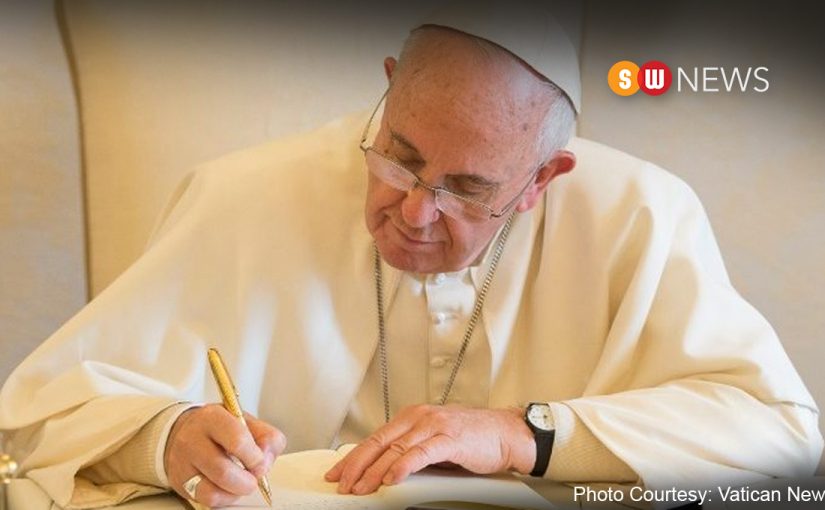


Vatican:
The Holy Father has issued a response to five Dubia (doubts) sent to him by Cardinal Walter Brandmuller and Cardinal Raymond Burke last July. The website of the Dicastery for the Doctrine of the Faith published the response of Pope Francis in Spanish to the Italian questions on Monday.
The first Dubium was whether Divine Revelation should be reinterpreted based on contemporary cultural and anthropological developments. The pontiff replied that the Divine Revelation was immutable and binding in all cases. Yet, “the Church must be humble and recognize that She never exhausts its unfathomable richness and needs to grow in her understanding”. The pontiff also explained that the Church matures in her understanding of what has been already affirmed in the Magisterium. Cultural challenges in no way modify Revelation, but stimulates everyone to express certain aspects of its “overflowing richness better”.
Replying to the Dubium that the widespread practice of blessing same-sex unions is tangible with Revelation and the Magisterium, Pope Francis cited Dei Verbum 10 saying “According to Divine Revelation, attested in Sacred Scripture, which the Church teaches, ‘listening to it devoutly, guarding it scrupulously and explaining it faithfully in accord with a divine commission and with the help of the Holy Spirit, "In the beginning," God created mankind in his own image, in the image of God he created them; male and female he created them and blessed them to be fruitful (cf. Genesis 1:27-28) and hence, the Apostle Paul teaches that denying sexual difference is the consequence of denying the Creator (Romans 1:24-32).”
The pope said the Church has a clearly defined understanding of marriage as an exclusive, stable and indissoluble union between a man and a woman, naturally open to procreation. He added that other unions realize it only in an analogous way and they cannot be called marriage.
He said that it is for this reason that the Church avoids any type of rite or sacrament that goes against this belief. However, the pontiff reminded that pastoral prudence was essential to discern whether there are forms of blessing that do not represent a mistaken concept of marriage. He also cautioned that such actions should not be elevated into a rule or discipline.
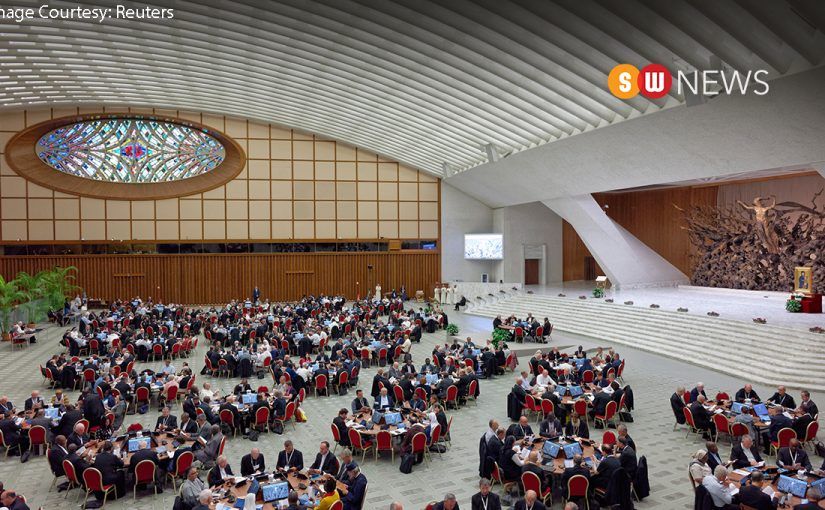
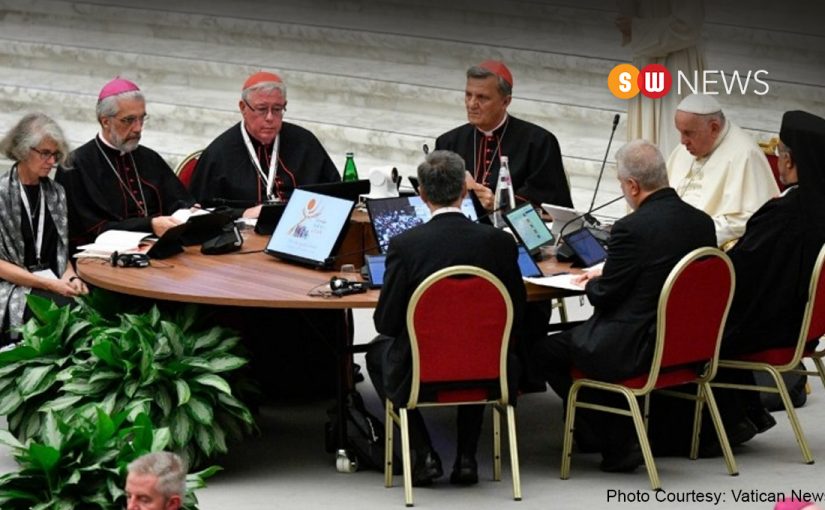
The third Dubia was whether synodality could be the supreme regulatory criterion of the permanent governance of the Catholic Church. In his reply, the Supreme Pastor of the Catholic Church clarified that the Church is a “mystery of missionary communion” implying real participation. The entire People of God can make their voices heard and feel part of the Church’s journey. In this context, Synodality as a style and dynamism is an essential dimension of the Church’s life. However, the pope cautioned against sacralizing or imposing a particular synodal methodology attractive to one group and turning it into a rule or an obligation. He said it risked freezing the Synodal journey by ignoring the traits of the particular Churches.
The next Dubium was whether the thinking that the theology of the Church has changed and so women’s ordination can be considered. The Holy Father’s reply cited Lumen Gentium saying that the “common priesthood of the faithful and the ministerial priesthood differ essentially. But the former in no way is of a second class, he reminded. He also cited Pope St John Paul II who taught that one must affirm definitively the impossibility of ordaining women to the priesthood, adding that in no way was he denigrating women.
While the priest alone presides over the Eucharist, the tasks “do not favor the superiority of one over the other”, said Pope Francis quoting the Polish pontiff. The Holy Father said that although the ordination of men is not a dogmatic definition, it must be adhered to by everyone and no one can contradict it.
The last Dubium was about whether repentance was not a necessary condition for sacramental absolution. In his reply, the pope asserted that repentance was necessary for the validity of absolution during Confession and it implies a resolution not to sin. But he explained that there was no “mathematics” involved in it, adding that “We are not masters but humble stewards of the Sacraments that nourish the faithful”.
Quoting Pope St John Paul II’s Letter to Cardinal William Baum and participants in the annual course of the Apostolic Penitentiary, March 22, 1996, Pope Francis said one should not demand from the abstract overly precise and certain resolutions of amendment, which ultimately become abstract or even narcissistic. Both the Cardinals were supported by Cardinals Juan Sandoval Íñiguez, Robert Sarah, and Joseph Zen Ze-kiun.
COMMENTS


RELATED NEWS