

Israel- Palestine War
Ukraine War
Synod 2023
Persecution
war and terrorism
Eucharistic congress
Israel- Palestine War
Ukraine War
Synod 2023
Persecution
war and terrorism
Eucharistic congress
Israel- Palestine War
Ukraine War
Synod 2023
Persecution
war and terrorism
Eucharistic congress
Israel- Palestine War
Ukraine War
Synod 2023
Persecution
war and terrorism
Eucharistic congress
Israel- Palestine War
Ukraine War
Synod 2023
Persecution
war and terrorism
Eucharistic congress
Israel- Palestine War
Ukraine War
Synod 2023
Persecution
war and terrorism
Eucharistic congress
MAGAZINES
VIDEOS



Senior-most South Korean prelate says Church is growing in communist North
News Desk
Wednesday, 18 May 2022


SW News: South Korea’s senior-most churchman, Archbishop Victorinus Yoon Kong-hi, 98, said that the Church in North Korea is growing despite the fact that Catholics live in hiding and suffer persecution. He made this remark in a recently published book.
According to UCANews, the book titled, “The Story of the North Korean Church” is in Korean and it records the history of the Catholic Church in the northern part of the Peninsula based on last year’s eight interviews with the archbishop, who was born there when both nations were one.
The archbishop emeritus of Gwangju in South Korea recollects the trees growing in the Tokwon seminary in the North where he studied and compares it with the Church in the communist country, saying, “The trees sprout new shoots in each branch each year. Like that, the Catholics who are hiding somewhere in the North are also growing.”
The nonagenarian archbishop was overwhelmed that his dream of publishing the book had come to pass and on the other side he helplessly admitted the fact that he couldn’t do anything for the Church in North Korea other than praying for peace.
Korean news portal chosun.com reported that the book was penned by writer Kwon Eun-jung and sponsored by the Catholic Oral History Records for Peace on the Korean Peninsula project of the Catholic Institute for Peace in Northeast Asia, a body under the Catholic Diocese of Uijeongbu.
The archbishop narrated in the book the testimonies of how the Church thrived in the North. He narrated how the missionaries distributed medicines to the poor who needed medical attention, established schools, and how the charitable works were carried out to support local Catholics, helping the Church grow.
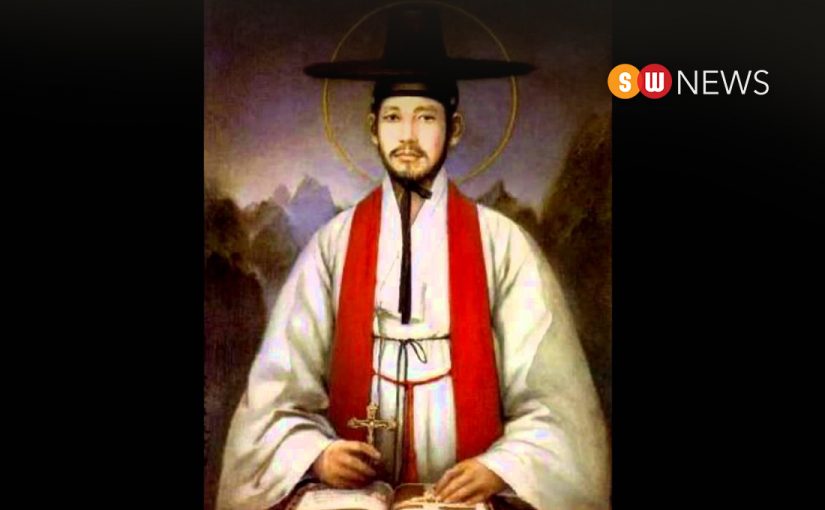
Archbishop Victorinus was born in 1924 to a Catholic family in Jinnampo of Hwanghae, North Korea. He was ordained as a priest on March 20, 1950. In 1951, he was appointed the chaplain of the UN camp for war refugees in Busan. He did his Sacred Theology in Rome at the Pontifical Urbania University and Pontifical Gregorian University from 1957 to 1960. He was appointed as the first bishop of the Suwon Diocese in 1963. Ten years later, he was made archbishop of Gwangju and he served until 2000. The prelate was also the chairman of Gwangju Catholic University from 1973 to 2010. He was designated as the president of the Catholic Bishops’ Conference of Korea from 1975 to 1981.
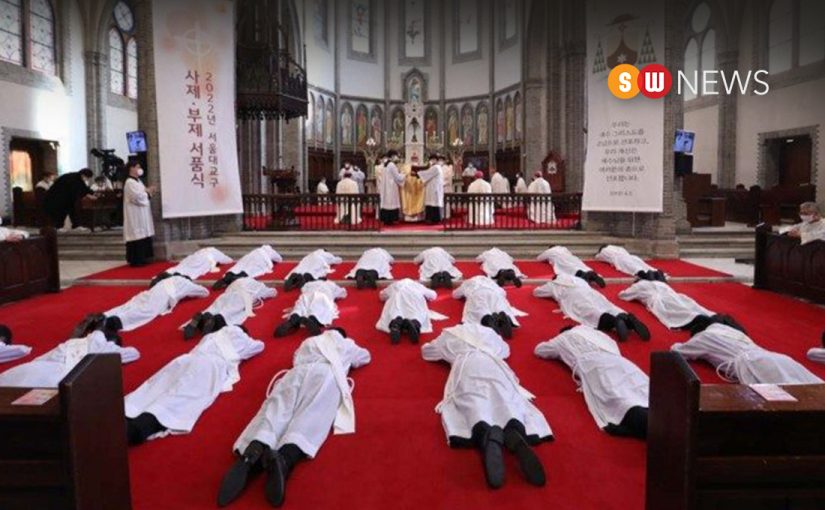
The archbishop recalled how North Korea is one of the biggest culprits of religious freedom deprivation and narrated how Catholic clergy, religious and laypeople were gripped by fear when the communist took over the country in 1949 and there were attacks on churches.
UCANews reported the archbishop recounting an unfortunate event that took place on May 9, 1949, when unexpectedly the emergency bell rang at the Tokwon Benedictine monastery and seminary run by German monks near Wonsan. At that time the archbishop was a student and he witnessed the chief abbot Bishop Boniface Sauer OSB being dragged away by the communists. His last words before he was taken away were, “As the Lord has called, and as the Lord has done, we must go out to the death with countless martyrs. Now, I am asking you to take this place without me. Go back and rest in peace. Let’s meet in heaven.” The abbot was later martyred in prison. His mortal remains were later identified from a common cemetery from his ubiquitous long white beard.
Four days later, the communists expelled 26 monks of the monastery and 73 seminarians and they left without taking any sacred objects, including their habits, beads and prayer books. It was then closed down and persecution of Christians began. From 1933 until 1948, the monastery was instrumental in the formation of 60 native priests.
North Korea is officially an atheist state with the main religions being Shamanism and Chondoism. However, the Christianity population is marginal in the communist country, at about 1.7 per cent.
COMMENTS


RELATED NEWS