

Israel- Palestine War
Ukraine War
Synod 2023
Persecution
war and terrorism
Eucharistic congress
Israel- Palestine War
Ukraine War
Synod 2023
Persecution
war and terrorism
Eucharistic congress
Israel- Palestine War
Ukraine War
Synod 2023
Persecution
war and terrorism
Eucharistic congress
Israel- Palestine War
Ukraine War
Synod 2023
Persecution
war and terrorism
Eucharistic congress
Israel- Palestine War
Ukraine War
Synod 2023
Persecution
war and terrorism
Eucharistic congress
Israel- Palestine War
Ukraine War
Synod 2023
Persecution
war and terrorism
Eucharistic congress
MAGAZINES
VIDEOS



US Supreme Court to hear Groff v. DeJoy case on April 18
News Desk
Tuesday, 07 Mar 2023
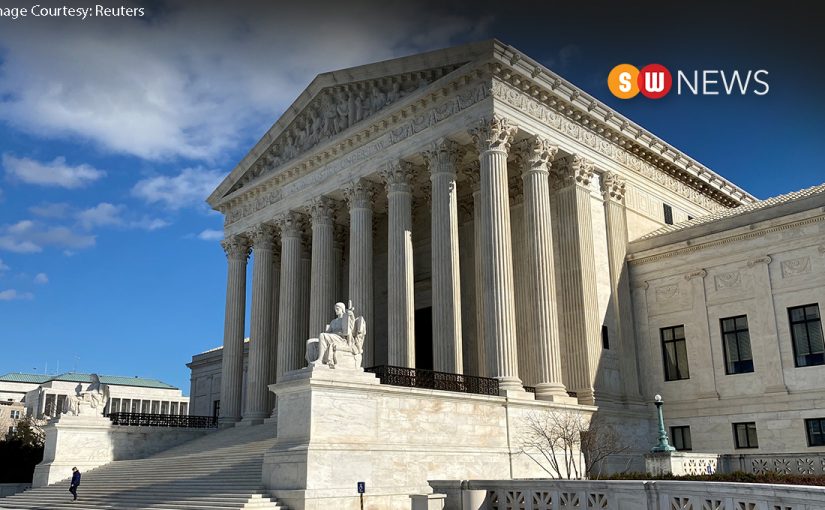


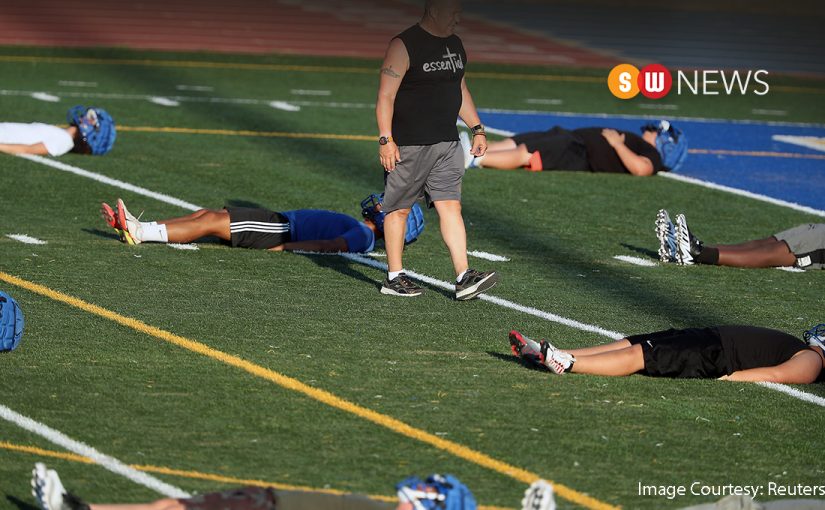
SW News: A case that might have significant ramifications for workers requesting religious accommodations from their employers is set for consideration by the US Supreme Court on April 18.
The top court will hear oral arguments in Groff v. DeJoy, an evangelical Christian and former US Postal Service (USPS) employee who was refused a reasonable accommodation to celebrate his Sabbath by not taking Sunday shifts.
The post office reached an agreement to deliver some Amazon packages on Sundays, and Groff sought accommodations to not work those shifts. He was initially accommodated, then disciplined for his refusal to work Sundays. He later resigned to avoid violating his convictions. Groff claimed in the federal court that USPS failed to provide him with reasonable accommodations for his religious practices. Unless the employer can demonstrate that the employee's religious practice cannot be "reasonably" accommodated without "undue hardship," it is illegal for employers to fire employees for requesting religious accommodations under federal law.
The "undue hardship" requirement is reached even at a low cost, according to a 1977 ruling by the Supreme Court in Trans World Airlines (TWA) v. Hardison. In this case, the Supreme Court interpreted Title VII of the Civil Rights Act of 1964 in setting limits to the accommodations that private employers were required to make on behalf of employees whose religious views limited their work on the Sabbath.
Justice Byron R. White, writing for the seven-justice majority, had claimed that TWA had made a reasonable effort to accommodate Hardison, that it didn't need to disregard its seniority system to provide the requested accommodation, and that alternative plans amounted to an "undue hardship" on the employer that the law did not require. White noted that neither term was defined in the Equal Employment Opportunity Commission rules, which called for "reasonable" accommodations that did not cause "undue" burdens.
Justice Thurgood Marshall wrote in his dissent, "All efforts under Title VII to adjust employment duties to religious practices were given a death blow by the ruling.” He cited other instances in which the Court had released believers from obligations imposed by the state, including Wisconsin v. Yoder (1972), Sherbert v. Verner (1963), and Zorach v. Clauson (1952), and argued that it might do the same for private employees.
Two issues are at stake in Groff v. DeJoy case: (1) whether TWA v. Hardison's more-than-de-minimis-cost standard for refusing religious accommodations under Title VII of the Civil Rights Act of 1964 should be upheld; and (2) whether an employer can prove "undue hardship on the conduct of the employer's business" under Title VII by merely demonstrating that the requested accommodation burdens the employee's coworkers rather than the business itself.
COMMENTS


RELATED NEWS